Rapid Color Changing Chemistry!
|
Sometimes it’s hard to tell SCIENCE from MAGIC - and this little demonstration is a great example
of that. In this experiment you will watch an almost clear liquid suddenly turn dark blue in a flash. It takes a bit of preparation, and probably a trip to the pharmacy for materials, but we think it’s worth it.  IMPORTANT SAFETY INFORMATION: This experiment should only be done with the help of an adult. Iodine will stain just about anything it touches and it can be hazardous. Hydrogen peroxide can cause eye and skin irritation - safety goggles are needed throughout the experiment. Be sure your helpful adult reads the caution labels on each container. 

 This is an example of the chemical reaction know as the IODINECLOCK REACTION. It is called a clock reaction because you can change the amount if time it takes for the liquids to turn blue. (see experiments below) The chemistry of the demonstration gets a bit complicated, but basically it is a battle of chemistry between the starch which is trying to turn the iodine blue, and the Vitamin C which is keeping it from turning blue. Eventually the Vitamin C loses and, bam! - you get instant blueness. Note: If you do not have liquid starch, you can also use 1/2 teaspoon of corn starch or potato starch. The liquids will be more cloudy and the reaction will happen a bit more slowly, but it’s still impressive. Clean up: Carefully pour all liquids down the drain with plenty of water and wash your hands. Recycle the cups or dispose of them in the trash.  The project above is a DEMONSTRATION. To make it a true experiment, you can try to answer these questions: 1. Does the temperature of the water affect how quickly the liquids turn blue? |
Saturday, 23 August 2014
Rapid Color Changing Chemistry!

Wednesday, 20 August 2014
Supernovas Might Create Weird 'Zombie Stars
Supernovas Might Create Weird 'Zombie Stars
 |
These observations from the Hubble Space Telescope show before and after views for the supernova SN 2012Z in the outskirts of the galaxy NGC 1309, 108 million light-years from Earth. Inset: SN 2012Z is seen in 2013, while data from 2005-2006 show its perceived progenitor star pair. Image released Aug. 6, 2014. Credit: NASA and ESA, Curtis McCully and Saurabh W Jha (Rutgers), Ryan J Foley (Illinois) |
These new findings may shed light on the origins of a mysterious kind of star explosion known as a Type Iax supernova, the researchers added.
Supernovas are the most powerful star explosions in the universe. They are bright enough to momentarily outshine their entire galaxies. [Supernova Photos: Amazing Views of Exploding Stars]
Scientists think a kind of stellar blast, known as a Type Ia supernova, occurs when one star pours enough fuel onto a dying companion star, known as a white dwarf, to trigger an extraordinary nuclear explosion. However, researchers have never actually seen what stars actually give rise to these outbursts, thus making their origins uncertain.
"Astronomers have been searching for decades for the progenitors of type Ia's," study co-author Saurabh Jha, an astronomer at Rutgers University in Piscataway, N.J., said in a statement. "Type Ia's are important because they're used to measure vast cosmic distances and the expansion of the universe."
Supernova sleuths
To learn more about white-dwarf supernovas, astronomers looked at an explosion dubbed SN 2012Z, discovered by the Lick Observatory Supernova Search in 2012. NASA's Hubble Space Telescope also took images of the supernova's host galaxy — NGC 1309, located 110 million light-years away — in 2005, 2006 and 2010 before the explosion took place. [Top 10 Star Mysteries]This past data helped researchers discover the apparent progenitor of the supernova. The likelihood the star they detected is related to the supernova is more than 99 percent, they said.
"We were tremendously excited to see a progenitor system for this supernova," lead study author Curtis McCully, an astronomer at Rutgers, told Space.com. "No one had ever seen a progenitor system for a white-dwarf supernova in pre-explosion data, so our expectation was that we wouldn't see anything. Nature surprised us, which is always exciting."
The researchers had expected that the supernova's progenitor system would be too faint to see, as was the case with previous searches for type Ia supernova progenitors.
"I was very surprised to see anything at the location of the supernova," McCully recalled.
Strange supernova science
SN 2012Z was actually a mysterious kind of exploding star known as a Type Iax supernova. First recognized 12 years ago, Type Iax supernovas were originally thought to be fainter cousins of the more common Type Ia supernova, but they now seem to be a related but distinct class. So far, astronomers have identified more than 30 of these unusual Type Iax supernovas, which occur at a rate of about one-fifth that of Type Ia supernovae, but release only between 1 and 50 percent of the energy.
The astronomers found that the progenitor system of SN 2012Z apparently consisted of a white dwarf and a bright-blue companion star. The researchers suggested the companion is a "helium star" whose outer shells of hydrogen have been stripped away, leaving only its helium core.
"Our results show that at least some white-dwarf supernova explosions arise from a white dwarf that accretes material from a luminous companion star," Jha told Space.com.
Instead of destroying the exploding star — as supernovas are often thought to do — SN 2012Z may have left behind a battered and bruised white dwarf, which the researchers called a "zombie star."
"There are indications that the white dwarf may not have been completely disrupted," study co-author Ryan Foley, an astronomer at the University of Illinois at Urbana-Champaign, told Space.com.
These findings suggest that Type Ia supernovas may have different origins than Type Iax supernovas. For instance, before and after images of Type Ia supernovas like SN 2014J and SN 2011fe would have been capable of revealing any blue progenitor system if one existed. However, none was seen.
"It certainly seems like most normal Type Ia supernovae cannot have a luminous blue companion star like in the case for this Type Iax supernova," Jha told Space.com.
Instead, this Type Iax supernova resembles a nova star explosion — a much-less-powerful stellar blast — called V445 Puppis, an explosion in the Milky Way that astronomers detected in 2000. Novas are like Type Ia supernovas in that they occur when white dwarfs accumulate fuel from a companion star, but novas do not completely destroy their stars like supernovas are thought to do. The researchers added that the progenitor system V445 Puppis nova is thought to consist of a white dwarf and a companion helium star, maybe just like SN 2012Z.
One possible scenario for this system the researchers modeled is that it originally consisted of two stars — one weighing four times the mass of the sun, and the other seven times the mass of the sun. The stars began exchanging hydrogen and helium fuel back and forth, with the larger star eventually dwindling to become a white dwarf about the mass of the sun, the researchers suggested.
The blue companion star, in turn, swelled in size and shed its outer layers, until it became a helium star about twice the mass of the sun. The white dwarf then siphoned matter from its blue companion until the extra fuel made it explode as a Type Iax supernova and blow off about half its mass, instead of completely dying, the researchers explained.
However, the researchers acknowledged that they cannot yet rule out other possibilities for the identity of the blue star they saw. For instance, it could have been a massive star 30 to 40 times the mass of the sun that destroyed itself when it detonated.
To settle the question once and for all, the researchers "will get future observations of the system in late 2015 with the Hubble Space Telescope after the supernova light has faded," Jha said. There are two possibilities: Either researchers will see no star at all, as would be the case if the supernova's progenitor was a massive star, or a helium star will be there "but it will have changed due to the explosion," Jha said. "We also hope to see the remnant zombie star," Jha added.
Solar System Evolution: Peering Back at the Sun's Cosmic Womb
Solar System Evolution: Peering Back at the Sun's Cosmic Womb
By Mike Wall, Senior Writer | August 07, 2014 02:01pm ET
 |
This illustration depicts a protoplanetary disc around a newborn star. Credit: University of Copenhagen/Lars Buchhave |
The solar system coalesced from a huge cloud of dust and gas that was isolated from the rest of the Milky Way galaxy for up to 30 million years before the sun's birth nearly 4.6 billion years ago, a new study published online today (Aug. 7) in the journal Science suggests. This cloud spawned perhaps tens of thousands of other stars as well, researchers said.
If further work confirms these findings, "we will have the proof that planetary systems can survive very well early interactions with many stellar siblings," said lead author Maria Lugaro, of Monash University in Australia. [Take Our Solar System Quiz]
"In general, becoming more intimate with the stellar nursery where the sun was born can help us [set] the sun within the context of the other billions of stars that are born in our galaxy, and the solar system within the context of the large family of extrasolar planetary systems that are currently being discovered," Lugaro told Space.com via email.
A star is born
Radiometric dating of meteorites has given scientists a precise age for the solar system — 4.57 billion years, give or take a few hundred thousand years. (The sun formed first, and the planets then coalesced from the disk of leftover material orbiting our star.)But Lugaro and her colleagues wanted to go back even further in time, to better understand how and when the solar system started taking shape.
This can be done by estimating the isotope abundances of certain radioactive elements known to be present throughout the Milky Way when the solar system was forming, and then comparing those abundances to the ones seen in ancient meteorites. (Isotopes are versions of an element that have different numbers of neutrons in their atomic nuclei.)
Because radioactive materials decay from one isotope to another at precise rates, this information allows researchers to determine when the cloud that formed the solar system segregated out from the greater galaxy — that is, when it ceased absorbing newly produced material from the interstellar medium.
Estimating radioisotope abudances throughout the Milky Way long ago is a tall order and involves complex computer modeling of how stars evolve, generate heavy elements in their interiors and eventually eject these materials into space, Lugaro said.
But she and her team made a key breakthrough, coming up with a better understanding of the nuclear structure of one radioisotope known as hafnium-181. This advance led the researchers to a much improved picture of how hafnium-182 — a different isotope whose abundances in the early solar system are well known — is created inside stars.
"I think our main advantage has been to be a team of experts in different fields: stellar astrophysics, nuclear physics, and meteoritic and planetary science so we have managed to exchange information effectively," Lugaro said.
A long-lasting stellar nursery
The team's calculations suggest that the solar system's raw materials were isolated for a long time before the sun formed — perhaps as long as 30 million years.
"Considering that it took less than 100 million years for the terrestrial planets to form, this incubation time seems astonishingly long," Martin Bizzarro, of the University of Copenhagen in Denmark, wrote in an accompanying "Perspectives" piece in the same issue of Science.
Bizzarro, like Lugaro, thinks the new results could have application far beyond our neck of the cosmic woods.
"With the anticipated discovery of Earthlike planets in habitable zones, the development of a unified model for the formation and evolution of our solar system is timely," Bizarro wrote. "The study of Lugaro et al. nicely illustrates that the integration of astrophysics, astronomy and cosmochemistry is the quickest route toward this challenging goal."
The researchers plan to investigate other heavy radioactive elements to confirm and refine their timing estimates, Lugaro said.
The abstract of the new study can be found here, while this link leads to the abstract of Bizzarro's companion piece.
Thursday, 7 August 2014

Wednesday, 9 July 2014
Top 10 Inventors of all Time
10 great inventors who helped change the world.
 Thomas Edison (1847 – 1931)Edison filed over 1,000 patents. He developed and innovated a wide range of products from the electric light bulb to the phonograph and motion picture camera.
 The Wright BrothersSuccessfully designed, built and flew the first powered aircraft, showing that man could fly. One of most important inventions of Twentieth Century.
 Benjamin Franklin (1705 – 1790)Polymath who discovered electricity and invented the Franklin stove
 Charles Babbage (1791 – 1871)- Created first mechanical computer, which proved to be the prototype for future computers. Considered to be the ‘Father of Computers’
 James Watt (1736 – 1819)Inventor of the steam engine, which was critical in the industrial revolution. His invention of a separate condensing chamber, greatly improved the efficiency of steam.
 Alexander Bell (1847 – 1922)Credited with inventing the first practical telephone. Also worked on optical telecommunications, aeronautics and hydrofoils.
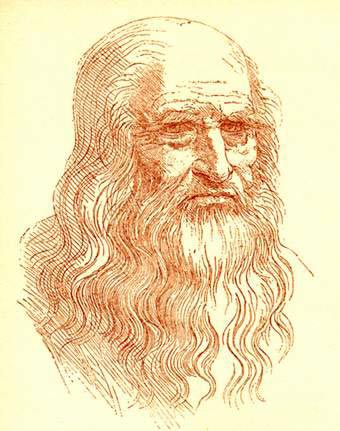 Leonardo Da Vinci (1452 – 1519)One of the greatest ever minds, invented models that proved workable 3-500 years later.
 Galileo (1564-1642)Developed a powerful telescope
and confirmed revolutionary theories about the nature of the world. Also developed an improved compass. Tim Berners LeeDeveloped
the http:// protocol for the internet.
Making the world wide web freely available.
 Archimedes (287 BC – c. 212 BC)Amongst other things worked out pi and developed the Archimedes screw for lifting up water from mines or wells.
Tuesday, 8 July 2014
GADJETS CHARGED BY SHOES

Each thud of a hiker’s heel releases enough energy to illuminate a light bulb. Rather than waste that power, Matt Stanton, an engineer and avid backpacker, created a shoe insole that stores it as electricity. The device promises to be an improvement over traditional, hefty power packs as well as solar chargers, which work slowly or not at all, depending on the weather.
Stanton worked closely with Hahna Alexander, a fellow Carnegie Mellon University engineering student, over three years to create the SolePower system. Instead of using piezoelectric and other inefficient, bulky methods of generating electricity, the pair shrunk down components similar to those found in hand-cranked flashlights. The result is a near standard–size removable insole that weighs less than five ounces, including a battery pack, and charges electronics via USB.
SolePower’s current version, to be released later this year, requires a lengthy 15-mile walk to charge a smartphone. But Stanton says the company is working toward a design that can charge an iPhone after less than five miles of hiking and withstand about 100 million footsteps of wear and tear.
How It Works:1) A drivetrain converts the energy of heel strikes into rotational energy, spinning magnetic rotors.2) The motion of the rotors induces an electrical current within coils of wire.3) Electricity travels along a wire and into a lithium-ion polymer battery pack on a wearer’s shoelaces.

Lead inventors: Hahna Alexander, Matt StantonDevelopment cost to date: $300,000Company: Sole Power LLC
Subscribe to:
Posts (Atom)